
Hubbard County Arrest Warrants Explained
An arrest warrant is a court order directing law enforcement to take a person into custody and bring them before a judge. The Hubbard County District Court issues it. The sheriff serves what the court signs. Behind the order sits a charging document. A complaint or an indictment lays out the basis, and a judge reviews those facts for probable cause before signing anything. A summons or citation left unanswered can also lead to a warrant under the appearance rules. Ask the Hubbard County clerk which paper started the case, since that shapes the search.
Hubbard County Probable Cause Basics
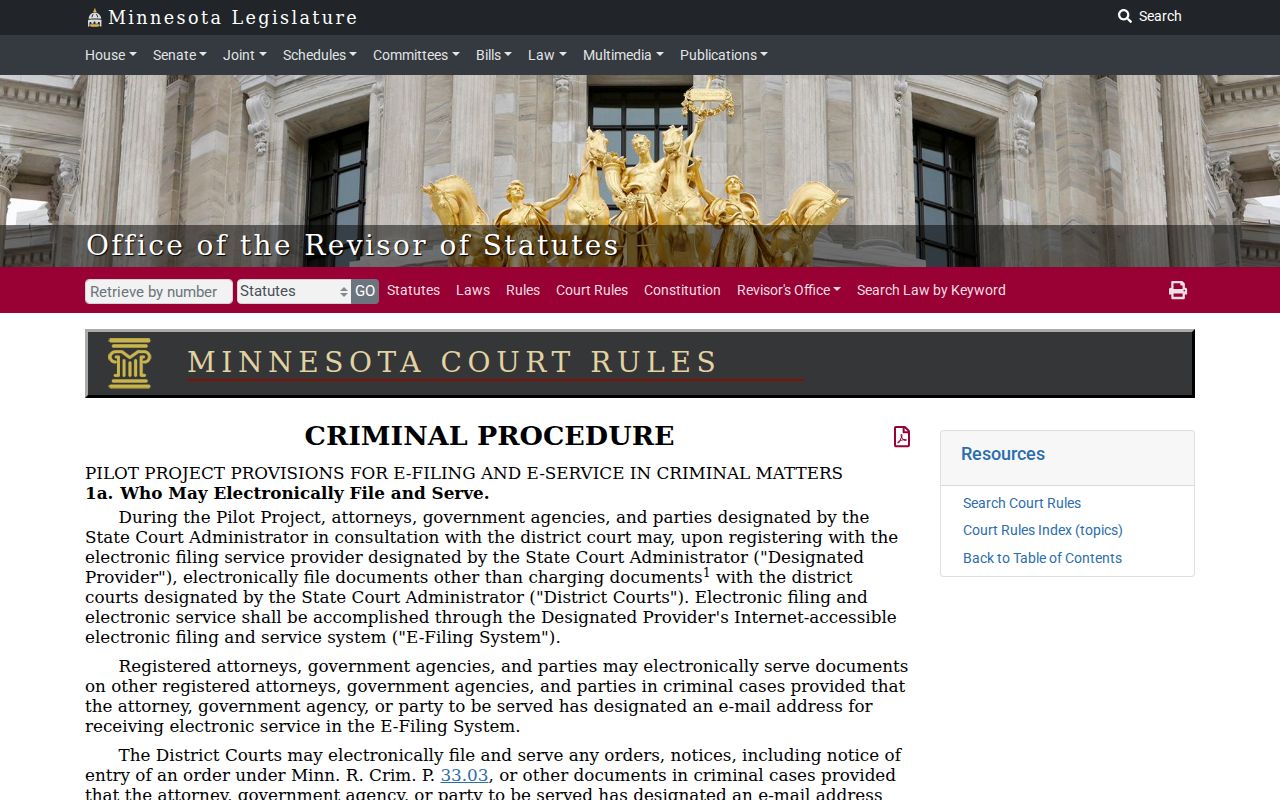
Probable cause is the test a judge applies before a Hubbard County warrant issues. Do the facts give a reasonable basis to think a crime occurred and that this person took part? A charging document lays out those facts, and the judge weighs them. Complaints and warrant paperwork can stay sealed while an arrest is still pending. Criminal rule 99 lets the court block public access when disclosure could tip off a suspect or harm the investigation.
A clean search can still sit next to an open warrant in Hubbard County. When the online record runs thin, the courthouse counter answers.
Inside a Hubbard County Arrest Warrant
A Hubbard County arrest warrant is built to be acted on. It names the case and the person. Scan the fields in order rather than reading the whole page; that is the quicker route.
| Case File Number | The court identifier, in the format 29-CR-24-118 with 29 as the Hubbard County code. |
|---|---|
| Warrant Type | Arrest warrant, bench or failure-to-appear warrant, or a sign-and-release warrant. |
| Charge and Statute | Offense description, the statute cited, and the felony, gross misdemeanor or misdemeanor class. |
| Probable Cause Basis | The complaint, indictment or failure-to-appear record behind the order. |
| Issuing Judge and Court | The judicial officer who signed, and Hubbard County District Court. |
| Command | Arrest and bring the person promptly before the court. |
| Bond or Release Terms | Bail, conditions or a no-bond flag where the court set one. |
| Service and Return | The serving agency, the date served, and the officer's return to the court. |
Hubbard County Bail and Bond Routes
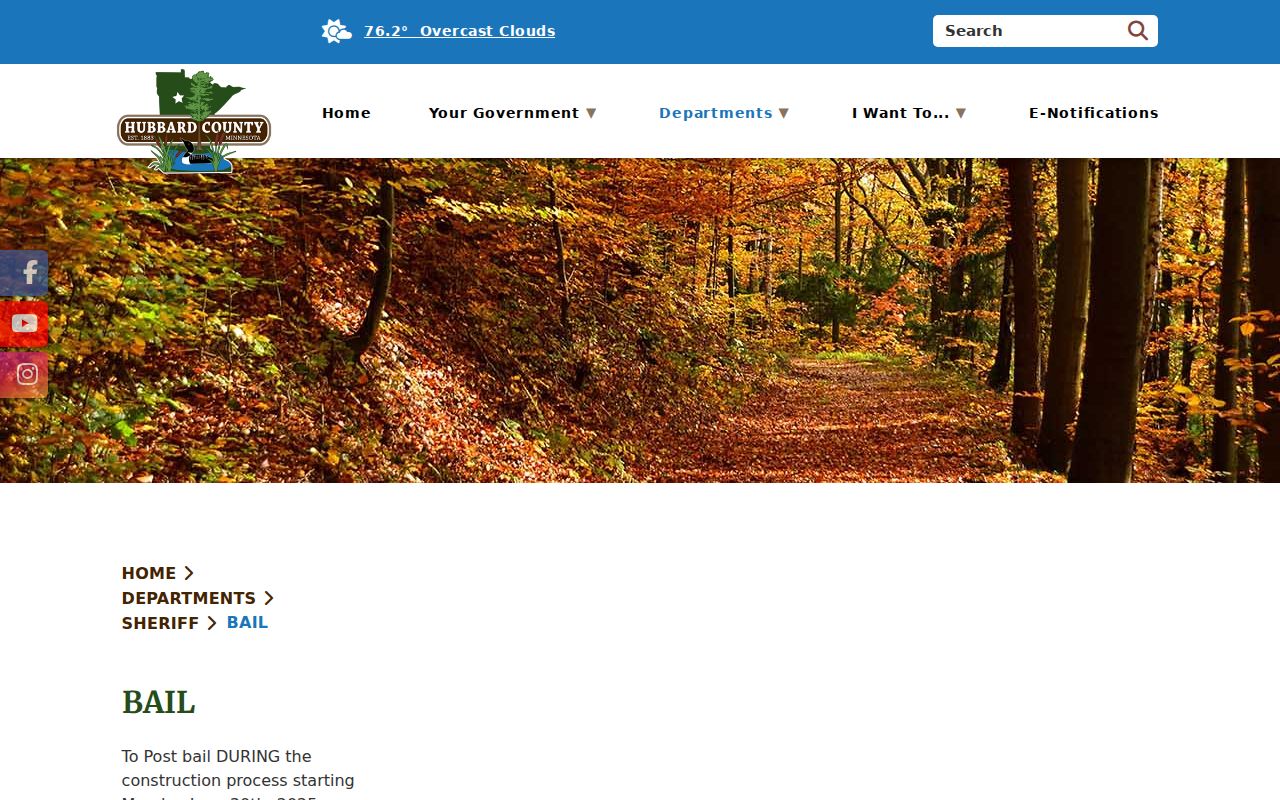
Bond in Hubbard County is set case by case. No published schedule tells you the amount ahead of time. What matters is where the money goes. A county notice effective June 30, 2025 routed daytime cash bail for county charges to the courthouse clerk of court office on weekdays. Earlier phases sent after-hours cash bail to the jail instead. Those instructions track a construction project, so confirm the current spot before you carry cash to either building. A bondsman is the other route. The county bail page spells out the phase language and the bondsman option.
Jail staff take cash only after hours and make no change. Refunds come by judge's order, usually a check mailed to the named person.
Serving Arrest Warrants in Hubbard County
The Hubbard County Sheriff's Office serves every arrest warrant that comes out of the court system. Court orders and civil process go through the same deputies. They also transport prisoners and guard courtrooms, and the sheriff runs the jail. Policing here is layered. Akeley has a chief of police. Nevis buys coverage from Hubbard County. Park Rapids fields its own department under the city code. Whichever agency makes the stop, the warrant behind it came from a court. Minnesota law also lets one peace officer act on a warrant relayed by another, and requires the officer to explain the ground for the arrest and show the warrant on request.
Hubbard County Inmate Locator Limits
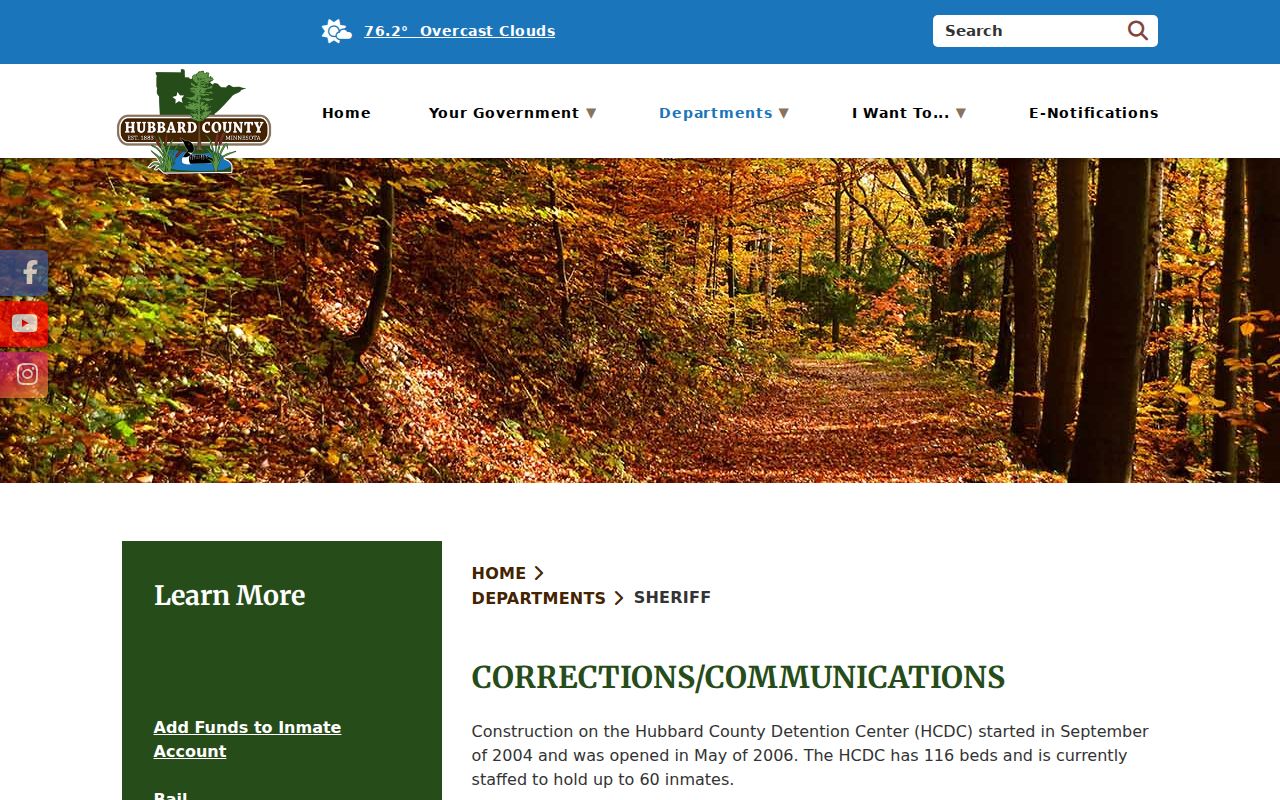
Hubbard County runs a custody locator that people often mistake for a warrant list. It is not one. It searches the jail population by last name, first name, gender and date of birth. Results include booking details, bail and fine amounts, custody dates and court dates. For custody questions, the corrections page carries the jail and booking contact structure.
Visiting rules sit apart from warrant questions in Hubbard County. Visitors need valid photo identification and a spot on the inmate list, and the detention visitor page covers screening and drop-off limits.
Comparing Arrest, Summons, and Bench Warrants
Three documents can pull a person into a Minnesota courtroom. Only one authorizes an arrest at the outset. In a Hubbard County case, knowing which document you are facing changes the practical answer.
| Document | What It Does | If It Is Ignored |
|---|---|---|
| Summons | Orders an appearance without custody | A warrant can follow under the court rules |
| Arrest warrant | Authorizes custody and a prompt appearance | Remains active until served or recalled |
| Bench warrant | Addresses a missed court obligation | May or may not authorize arrest |
| Sign-and-release warrant | Delivers written notice of a new date | Another missed date can bring new consequences |
Federal Warrants Outside Hubbard County
A federal warrant is a different animal. It will never appear in the Hubbard County system. Federal arrest warrants come from the U.S. District Court for the District of Minnesota, built on a complaint, an indictment, or another filed charging document. The first appearance happens before a magistrate judge. Detention and bond follow federal procedure, not county rules, so Hubbard County staff have no hand in those decisions. The North Star Fugitive Task Force, led by the U.S. Marshals Service with state and local partners, adopts state and local warrants for pending charges, probation violations, and failures to comply with court conditions. That means a local warrant can gain federal reach. Public access to federal warrant material is often delayed or sealed. For questions about a federal case, the U.S. Attorney's offices in Minneapolis and St. Paul handle the information.
If There's an Arrest Warrant for You
Before you act on a Hubbard County warrant, get the facts straight from the court. Call the clerk, confirm the case number, and ask what type of warrant it is. Staff can also tell you whether a hearing is already set. What they cannot do is advise you on handling an active warrant, so bring that question to a lawyer.
Important: An arrest warrant can lead to custody at a traffic stop, at work or at a courthouse counter. Talk to an attorney before making a move.
If a Hubbard County arrest warrant names you, ask about a scheduled surrender and what release conditions apply. A bond route may be open. Keep every paper from the process, and remember the case itself still has to be resolved.
Before a Hubbard County Surrender
A planned surrender works better than showing up unannounced. Call both the Hubbard County court and the sheriff first. Ask what identification and paperwork to bring, whether a booking window applies, and where bond gets posted. When you can, have a lawyer contact the prosecutor about timing. It also pays to ask practical questions: should you bring medications, can someone be notified, and how long booking usually takes at the Hubbard County jail. After the appearance, confirm that the warrant recall or service entry is on the case record, and request a current status document. The Hubbard County warrant records overview lists the counters to call and the order to call them.