
Hubbard County Traffic Warrants Explained
Every traffic ticket in Hubbard County lands in district court, whether it was written by the Hubbard County Sheriff's Office, Akeley police, a Nevis contract deputy, or Park Rapids police. No municipal court or justice court splits these cases off. The citation itself warns that skipping a required appearance or contact can bring a warrant. Once the deadline passes without a response, the court can issue one. For a qualifying first miss on an eligible offense, a sign-and-release warrant may be the form it takes. Note: A traffic warrant is court process, not a driving record, and it says nothing about insurance or driving history.
Hubbard County Citation Numbers Explained
Two different numbers matter in a Hubbard County traffic matter. The citation number is the twelve-digit number printed on the ticket, usually near the top corner or the barcode. The court case number comes later, created once the citation is filed and entered into the system. That Hubbard County case number carries more detail: in Minnesota it identifies the county, the case type, the filing year, and a sequence. A CR code means the offense requires a court appearance. A VB code marks a payable case. Keep both numbers together, because a payment center, a court clerk, and a records request all move faster with one of them in hand.
Checking for a Traffic Warrant
Check the case record, not the vehicle. The state case portal searches by citation number, case number, or name, and the county filter narrows a common-name search to Hubbard County. A blank result does not prove no warrant exists.
- Search the citation or case number in the state case portal first.
- Read the docket for a missed appearance, a late penalty or a warrant entry.
- Call Hubbard County Court Administration about the file and the current status.
- Call the state payment center when the case is payable without an appearance.
- Call the sheriff's non-emergency line if a warrant has already been issued.
- Ask the court whether the warrant is sign-and-release or arrest-authorizing.
The Seven-Day Hubbard County Filing Lag
A fresh citation will not answer a search right away. Hubbard County law enforcement has to file the ticket first, and then the state case system has to enter it. The Judicial Branch says that can take up to seven days, sometimes longer. Only then does the citation become searchable. If more than seven business days pass with no result, call the payment center instead of assuming the ticket was dropped. Phone staff there can search by driver's license number. No citation number? They can work from a vehicle plate plus a date of birth. The automated web and phone payment systems will not run a plate on its own, which is why the phone route exists at all.
Inside a Traffic Warrant Record
A traffic warrant record traces back to the citation that produced it. The fields below decide what you can do about it. The first question is whether the offense was payable or required a court date.
| Citation Number | The twelve-digit number from the ticket, shown here as 29-VB-24-4417 in case-number form. |
|---|---|
| Case Type | CR for a mandatory appearance, VB for a payable offense handled without a hearing. |
| Offense | The statute or ordinance cited, the offense level, and the fine or bail amount where set. |
| Missing Event | The payment deadline or hearing date that was not met. |
| Warrant Type and Status | Sign-and-release or arrest-authorizing, active or recalled, with the issue date. |
| Issuing Court | Hubbard County District Court, with the judicial officer on the order. |
| Next Step | Payment, a payment plan, an appearance, or a court date on a written notice. |
Hubbard County Citation Payments and Waivers
Hubbard County traffic tickets get paid through the state's Judicial Branch citation page. One lookup covers it. Enter a citation or case number and the fine amount appears, along with every way to pay it. You can pay online, call in the amount, mail it to the Court Payment Center, or walk into the district court that issued the citation. The citation and payment page puts the lookup and all those payment channels in one spot, so start there before a missed deadline turns a ticket into a warrant.
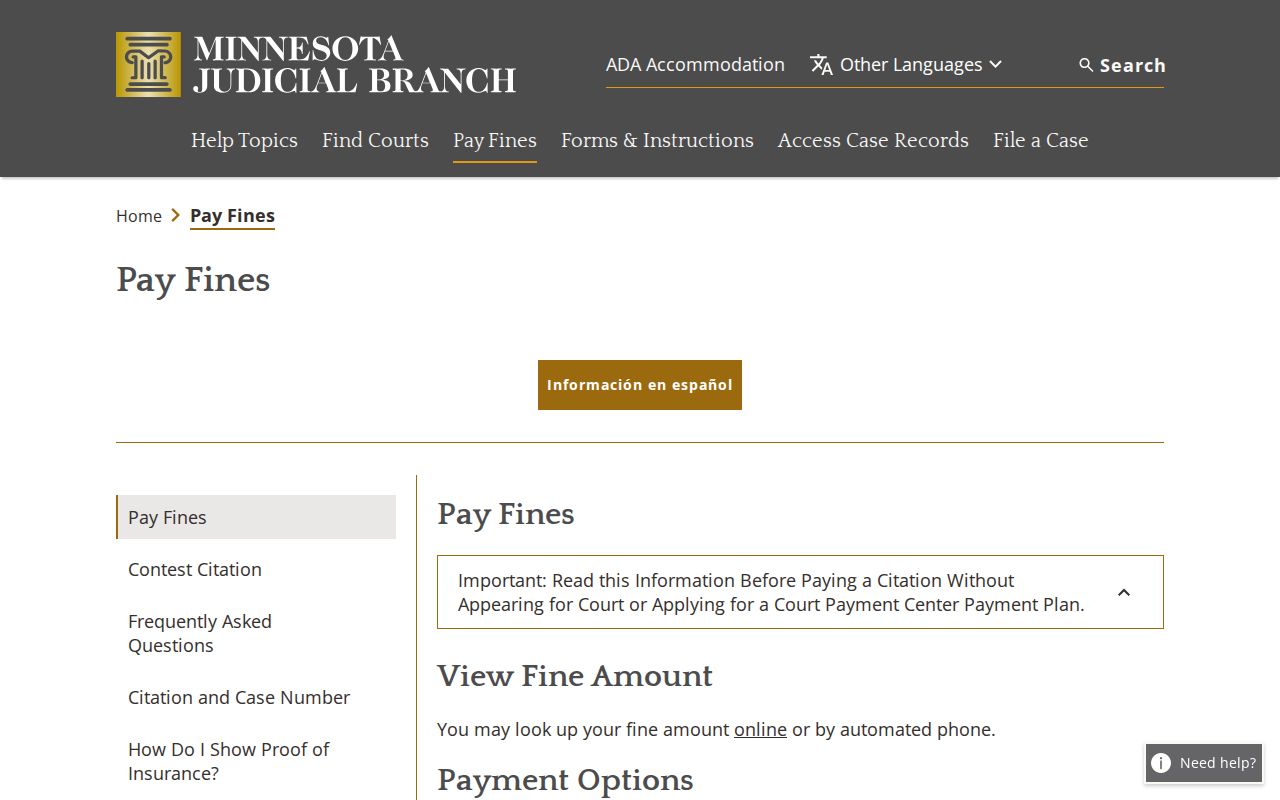
Pay only if the offense is payable without an appearance. A CR case requires a court date. Paying a payable ticket can act as a guilty plea that waives trial and related rights on the listed offense.
Hubbard County Payment Plans
A fine you cannot pay in one sum can go on a plan through the payment center. Eligibility takes a payable citation, a first plan request in the case, no prior court or hearing officer appearance, and no second late penalty. The plan runs fifty dollars a month until the fines and fees are paid. Applications take two to three business days to process. Instead of a plan, a person can ask the court for a waiver based on indigency or undue hardship. A plan alone does not clear a warrant. If Hubbard County has already issued one, ask the court what the plan does to the case and whether the warrant must be recalled separately.
How to Pay or Lift a Traffic Warrant
Clearing a Hubbard County traffic warrant takes two steps, not one. Paying the fine may end a payable case. But an arrest-authorizing warrant still has to be recalled or served through the Hubbard County court process.
Check the case type first: paying a mandatory-appearance case, or paying instead of appearing, can carry consequences the citation notice spells out.
Confirm the warrant type with Hubbard County Court Administration first. Then choose the route the court describes: payment, a plan, a scheduled appearance, bond, or an attorney motion. Ask when the record updates and how to confirm the recall afterward.
Traffic Warrants, FTA, and License Holds
A license hold and a warrant are two different things. A warrant is a court order to appear or be brought in. A hold is a licensing action instead. Minnesota law lets a Hubbard County court report qualifying failures to appear to the Department of Public Safety, which mails notice and may suspend the license once thirty days pass. Some petty misdemeanors and other specified nonappearances are exempt from this. So an outstanding warrant can hang over a case while the license question runs on its own track.
Key Statute: Minnesota Statutes 171.16 governs the failure-to-appear report, the notice, the thirty-day response window and the exceptions.
Hubbard County Court Record Access
Traffic files follow the same access rules as any other Hubbard County District Court record. Remote access is the narrower route. Anything deeper usually means a trip to the courthouse. The public terminal in Park Rapids carries the full record. The public access rule shields restricted identifiers in remote records but leaves inspection and copying open where the originals are kept.
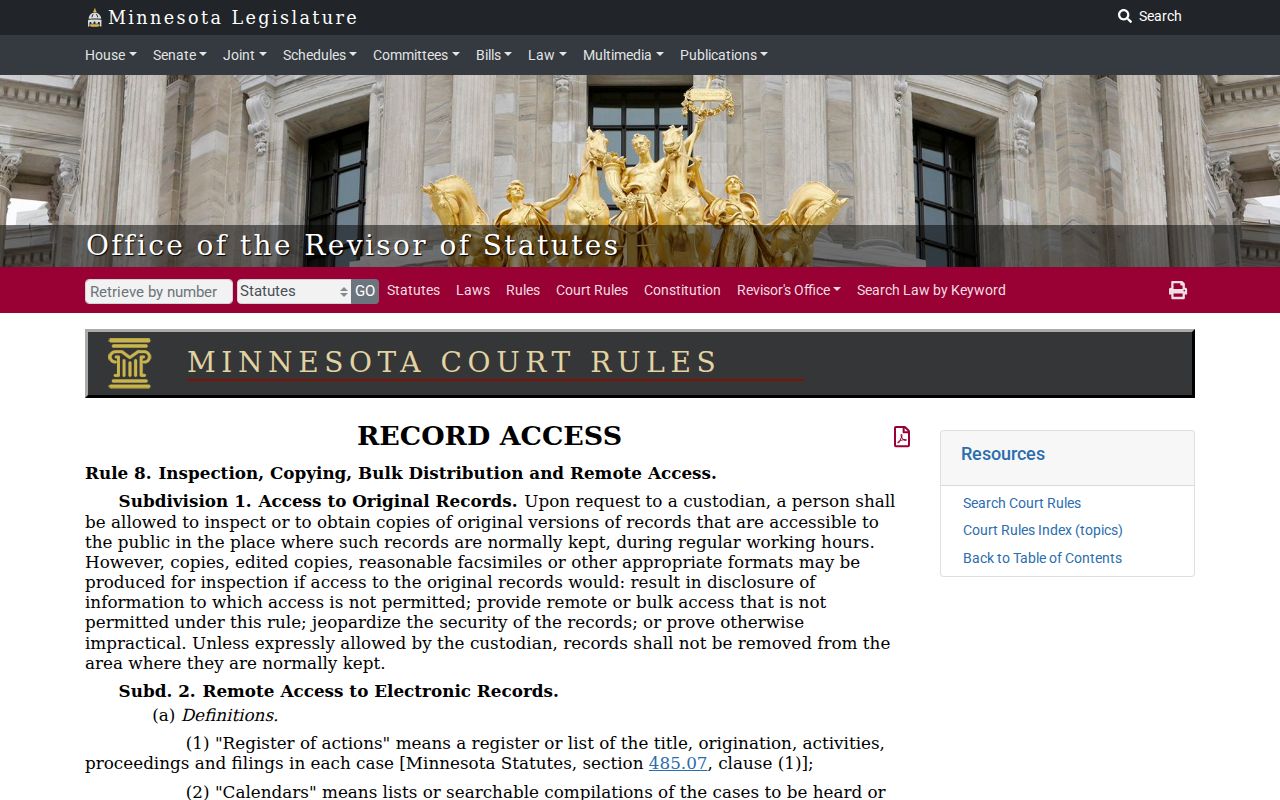
When the question is a warrant rather than a case file, start one level up. The Hubbard County warrant records overview matches each counter to the office that answers for it.